The bus terminal in Arica is simply crazy, a roofless crowded area with walls covered in signs, the boleteria at the entry is where you pay the fee to use the station, and you have to! As you enter, people shout at you names of places they travel to along with the time of departure.
We searched for a bus to take us to Tacna originally, but as we changed aisles, all the stands that sold tickets to Bolivia stood before our eyes, each messier than the last. We walked past the sellers that shouted "La Paz" while looking for a cheaper option and just at the end of the aisle, a humble company caught our eye, ran by a woman with a baby and what looked like her husband. She quickly sold us tickets for the following morning for 10.000 CLP each and told us to be there 10 minutes before departing.
Next morning we woke up still a little nervous about climbing over 4000 metres and headed to the station. We arrived at 8:30 am, half an hour before leaving and gave her our passports for the lady to register us. As minutes went past, a couple of travellers from Belgium told us we had to pay the fee at the entrance of the terminal, and came back to find out that we still hadn't been registered at 8:55, panicking a bit about our passports, we hurried them up as we put our luggage into the bus. We got our passports just in time before leaving.
As we were pulling out of the station, Anna, the girl from Belgium told us she hadn't yet got her passport back, so we asked the driver to stop and find the woman to give their passports back! Just in time!
We finally left, the journey was fine, steady going up. However, after reaching lake Chungara, altitude started being an issue, head spinning, stomach feeling feeble and heart beating faster. The border crossing was soon upon us, and even though Oli was okay at this point, taking pictures of the view, I wasn't really keen on it in my state.
We crossed into Bolivia feeling a little hungry and decided to eat once heading to La Paz. First bite and altitude hit me abruptly, I felt bad, then worse and then... then it was gone, I ate, laughed and talked until I fell asleep.
I woke up to the voice of one of the workers, hoping he was telling us we had arrived to La Paz. Him and the guy sat in front were arguing and after a few seconds of waking up, I finally started to understand what was happening: We were being dropped off at El Alto, due to what apparently were riots at the entrance of La Paz. It took me even longer to realise he was saying "they are breaking the glasses" (meaning the windows). He gave us 3 Bolivians each and told us to take a minibus into the capital, and so we got off the bus.
Our time in Bolivia had a pretty interesting start. We walked about 6 blocks and crossed a couple of roads before getting on a minibus that charged 1.50 bolivians the seat. Our luggage occupied three seats and we occupied five, we were a bit short, but we paid the extras from some cash the other guys seemed to carry.
We entered La Paz, our eyes proved the rioting that had been going on at the border crossing, broken glass, police everywhere. But as we entered, the beautiful view of La Paz from the top arose.
Showing posts with label chile. Show all posts
Friday, January 8, 2016
Arica. Chile. 06.01.15
- How to get there: Arica is the city that borders with Peru, you can get to Arica from many places on a single bus journey. We had to break it into two because there was no space on the buses leaving from Caldera, so we did Caldera - Antofagasta. In Antofagasta there are lots of buses going to Arica.
- Arriving to Arica: The national bus station and the international one are right next to each other, but locals don't recommend staying in that area since it could be a little dangerous. Taxis shouldn't charge you over 2.500 CLP to go into the centre.
Arica is a big city, though at first it might not look like one. However, there is not much to do in Arica apart from great places for shopping cheap clothes and artisan goods and delicious street food. There is a small mountain (or big hill) with a flag at the top of it that people keep on "trekking" to see a panoramic view of the city. It isn't really much of a trek, exhausting 15 really steep minutes, that's all. The view at the top is a quite impressive view of the city. Arica is not an ugly city, and it has a unique feeling that makes it different from the rest of Chile. At the top there's not only a proud Chilean flag, there's also a statue of Jesus and a museum dedicated to the army which has an entry fee of 1.000 CLP for adults.
After walking back down we had a stroll around the city, having a look at the narrow shopping centres and at the street stands. We entered a market that had lots of bars that exclusively sold fruit juices. We sat in one to have a couple of them and received two jugs of juice (yes, jugs) for 3.000CLP the milk one and 2.500CLP the water one.
We had lunch at a street stand when we went back to the bus station to get tickets to go to Peru. The food was simply amazing: chicken, chips (fries) and salad with spicy sauce for 1.500 CLP each. Oh, and we are going to Bolivia.
Labels:
arica,
backpacker,
border,
chile,
city,
flag,
mountain,
museum,
peru,
southamerica,
travel,
travelling
Wednesday, January 6, 2016
Bahia Inglesa, Chile 03-04.01.16
- How to get there: From Santiago to Bahia Inglesa is 894kms (9-11 hours). We got a night bus from Santiago to Copiapo taking 11 hours with Pullman bus company costing 16.000 CLP. The road is in perfect condition throughout the journey. From Copiapo take a bus to Caldera, takes 40 minutes to get there. If you go to the bus station in the morning, they will tell you how to do it. It costs 2.000 CLP per person. From Caldera to Bahia Inglesa we took a taxi that charged us 1.000 CLP each, takes 7 minutes to get to Bahia Inglesa.
- Arriving to Bahia Inglesa: Book your accommodation before you arrive, or camp at the beach if you like. Accommodation is expensive and for several days only. If you're in a tight budget, make sure you buy your food from a supermarket in Copiapo.
We stayed in a room that had a view to the sea, spacious, clean and comfortable. It cost 50.000 CLP per night paid cash. You can cook your own food at the place, so you don't need to eat out when you're here if you don't fancy spending that money.
The place looks more like a touristic area in the south of Spain than a Chilean coastal town, they live from the hundreds of people that gather here every summer to sunbathe and relax. We point out that summer here means December, January and February and as we arrived on a Sunday, it was as crowded as it gets.
Walking along the beach all you could see was the white sand and the reflection of it everywhere. The water is clear and clean, the avenue that stands beside it holds restaurants, shops and bars. By the road side, street stands sell hats, necklaces and toys that give you the true beach feeling.
The beach is empty every morning, when the clouds still cover the bright blue sky and the wind blows buoyant. When the clouds clear up, people seem to come out of nowhere and the beach becomes noisy and lively. The water remains bitter and bathing is not everybody's choice, withal it's still pleasant to sit by the sound of the sea.
We ate at Coral de Bahia, the menu is more international and it's in English and Spanish. Even though we are not very big fans of seafood, the choice of seafood is varied and appetizing. We both went for the Chicken Tikka Massala for 9.000 CLP each and had a couple of drinks. It all summed up to 24.000 CLP tip included.
Labels:
atacama,
backpacker,
bahia,
beach,
camping,
chile,
southamerica,
travel,
travelling
Sunday, January 3, 2016
Copiapo. Chile. 02.01.16
- How we got here: We took a bus from Santiago which cost us 16.000 CLP per person for a half bed with Pullman Bus and it took just over 11 hours to get here.
- The bus left at 20:00 and arrived at 7:15 the next morning, they have pillows and blankets but they don't provide it. Bring some drink, but don't bring food, they give you breakfast in the morning.
Arriving to Copiapo: It doesn't look like the type of place that would attract tourists and there is not much to do here, we didn't know and booked a hotel in the centre of Copiapo (Il Riposo) for 45.000 CLP, but if you can just take a bus to Bahia Inglesa immediately after you arrive.
What to do in Copiapo: As we have already said, there is not much to do in the centre, it looks dusty and the number of homeless people is even higher than in other towns. However, even though it didn't give a good first impression we gave it a try.
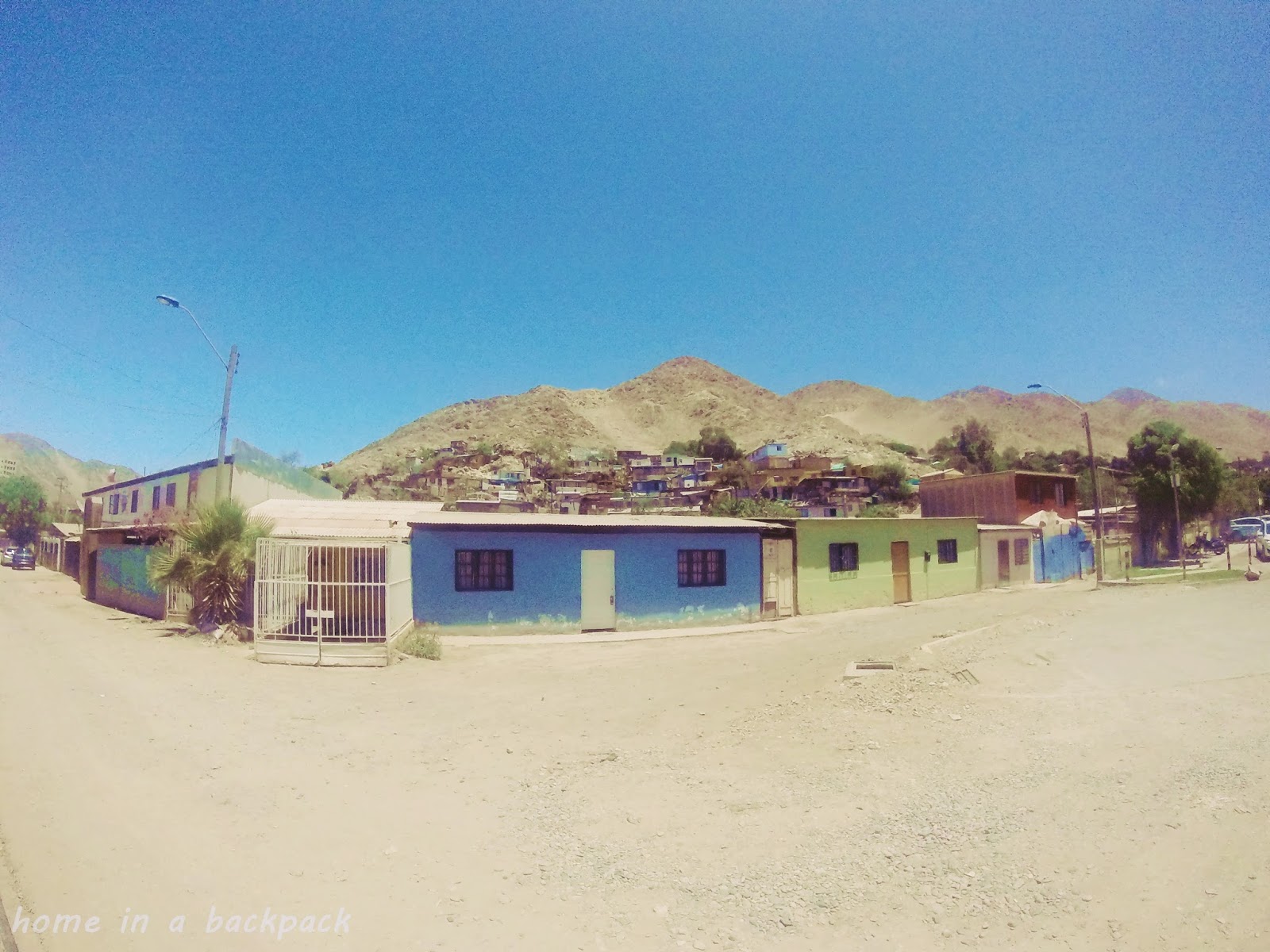
It is and looks like a desert, the air is dry and the sun, constant. There are some nice mountains surrounding the town though, we saw someone hiking one of the smaller ones, which was topped with a cross. At the bottom of this mountain there were some run down houses, and what looked like an old railway line.
We walked back to the town to find a free museum (which was closed at the time), a nice church and a square that had some kind of charm.
As a town, Copiapo might be your place if you're looking for a mild temperature in the middle of nowhere, that leaves you close enough to some really interesting spots in the region. When you arrive you won't know in which direction to turn because there's so much around this area.
Labels:
atacama,
backpacker,
chile,
copiapo,
southamerica,
transport,
travel,
travelling
Santiago de Chile to start 2016
We arrived to Santiago during the build up to New Year's eve. This time of the year is crazy in the city, everyone takes the party very seriously and sellers and buyers gathered on the streets to get the cheapest fireworks and colour sprays for the night. We stayed near Estacion Central where the metro station meets the train station at the hotel Imperio. It cost 38.000 per night with breakfast included, and although it might seem a bit pricey it places you in the middle of the chaos. The market that surrounded the entire area sold all kinds of things and it was noisy and lively the entire time we were there.
Some curious things we noticed about Santiago during New Year's eve is that they use yellow underwear for luck, they use masks, hats and "matasuegras", as well as loving the culture of fireworks. This is starting to get lost in Spain for the risks and the children being irresponsible but here it's still big and used by people of all ages.
All the build-up was impressive and at night, on the 31st, after 6pm people left the streets to get ready for a long night. All the shops and the markets closed and we stayed in the hotel, wishing a happy new year to earlier time zones and eating chocolate. We heard a few fireworks but nothing too big, we slept just fine so it wasn't that noisy around our area after all.
We woke up the first of January to find an empty street, nothing open. It was midday and except for a restaurant on the corner from our hotel, everything was closed for the new year. We decided to take the metro and venture somewhere during that quiet day in Santiago. We took the metro to Universidad de Chile and walked to the main square. There was a lot to do in this area and we found what seemed to be the heart of Santiago. We took pictures of the main buildings and inside a church where there was a service going on. The architecture around La Moneda and U. De Chile is pretty impressive and we recommend it if you are into that kind of photography.
We ate at Telepizza (9.090 pesos) the only thing open around and went back to our station as the sun was rising right on top of our heads.
During our time in Santiago we also managed to visit the national football stadium in Nuble. We were let inside the stadium with the only condition of not stepping on the grass!
Subscribe to:
Posts (Atom)